
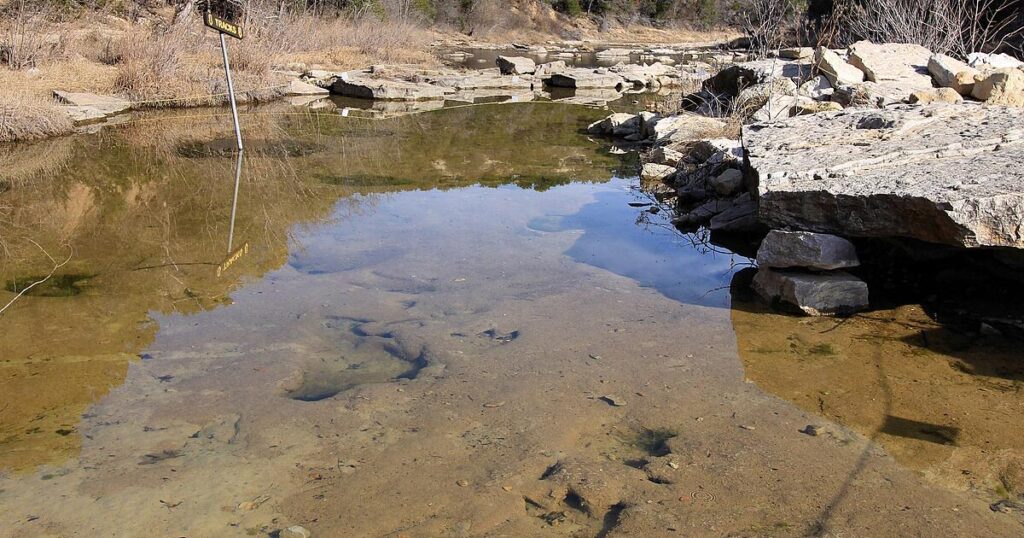
Featured image: Dinosaur tracks at Dinosaur Valley State Park. Photo by Larry D. Moore, CC BY 4.0, via Wikimedia Commons. Cropped and resized.
A dinosaur museum can fill an afternoon. A good dinosaur road trip gives you a reason to keep going: a fossil wall, tracks in a riverbed, a second museum that explains the landscape, or a chance to help scientists in the field.
These five dinosaur road trips in the U.S. combine public visitor attractions with practical driving routes and other worthwhile stops. Some are easy weekends built around one home base; others work better as a short drive between towns. You do not need to cross half the country to make the dinosaurs worth the mileage.
Our guide to the best dinosaur attractions in the United States helps you choose an individual museum, trackway or fossil site. Here, the focus is building a trip around those experiences: which stops fit together, where to base yourself, how much driving to expect and which activities depend on the season.
Planning details reviewed: October 8, 2026. These are public visitor destinations, but seasonal museums and supervised digs are not available every day. Check the linked official pages before reserving lodging. Driving figures are rounded planning estimates for the named legs, not live traffic predictions; they exclude time inside attractions and travel from your home.
Choose Your Dinosaur Road Trip
1. Vernal, Utah: Dinosaur Country Without the Long Detours
Best for: A first fossil-focused trip and travelers who want geology alongside museum displays.
Suggested time: 2–3 days.
Main stops: Utah Field House, Dinosaur National Monument’s Quarry Exhibit Hall, Cub Creek Road and Steinaker State Park.
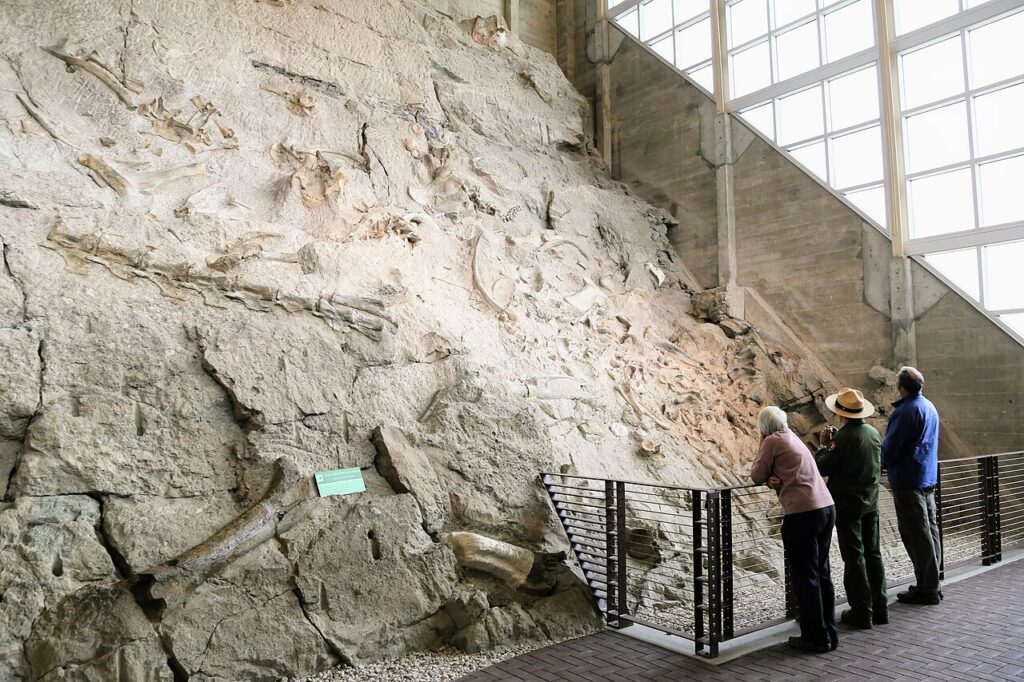
Vernal is a useful base because the museum, fossil quarry and nearby reservoir do not require changing hotels. Begin at the Utah Field House of Natural History State Park Museum in town. Its exhibits and dinosaur garden give the next day’s fossils some context. The posted museum schedule currently excludes Sundays, so put this stop on a day it is open.
On the following morning, drive east on US-40 to Jensen, then north on UT-149 to the Quarry Visitor Center: roughly 20 miles and 30–40 minutes from central Vernal. The Quarry Exhibit Hall contains approximately 1,500 dinosaur bones still embedded in the rock. This is the reason to build the trip around Vernal.
Choose the correct entrance: The fossil wall is on the Utah side of Dinosaur National Monument. The Colorado entrance near the town of Dinosaur serves canyon scenery, not the quarry. Treat Colorado-side sightseeing as a separate extension rather than a shortcut between fossil stops.
After the quarry, consider the Tour of the Tilted Rocks along Cub Creek Road. The full drive is 10 miles each way; its first eight miles are paved and its final two are unpaved. An out-and-back on the paved section is enough for a shorter geology outing. Allow another hour or two for stops rather than counting only driving time.
If you have a third day, Steinaker State Park adds reservoir scenery and a picnic break a few miles north of Vernal. Keep it separate from the quarry day if the children have already had enough time in the car. Use Vernal for lodging, meals and fuel, and carry lunch and extra water into the monument.
Open the suggested driving route in Google Maps
Access and season: The quarry uses a seasonal shuttle; when it is not operating, visitors can normally drive to the exhibit hall. NPS also permits personal-vehicle access for visitors who would have difficulty boarding the shuttle. Check current monument conditions before adding side roads. The October 2, 2026 update reports storm-related closures at Echo Park and Rainbow Park; neither is needed for this route.
Traveling with a senior or baby: Make the indoor quarry the priority. Its floors are connected by ramps. The Fossil Discovery Trail is an optional exposed walk, not a required route to see the wall.
Photography tip: Take one wide photo of the fossil wall with a person in the foreground for scale, then a close detail of a bone. On Cub Creek Road, photograph the angled layers from designated pullouts.
Keepsake idea: A Junior Ranger booklet or badge and a labeled fossil-wall photo make a more personal reminder than collecting a rock. Leave fossils and natural objects where they belong.
2. Glen Rose, Texas: Real Tracks and an Easy Family Weekend
Best for: Families who want outdoor dinosaurs with a different activity the next day.
Suggested time: 2 days.
Main stops: Dinosaur Valley State Park, downtown Glen Rose and Fossil Rim Wildlife Center.
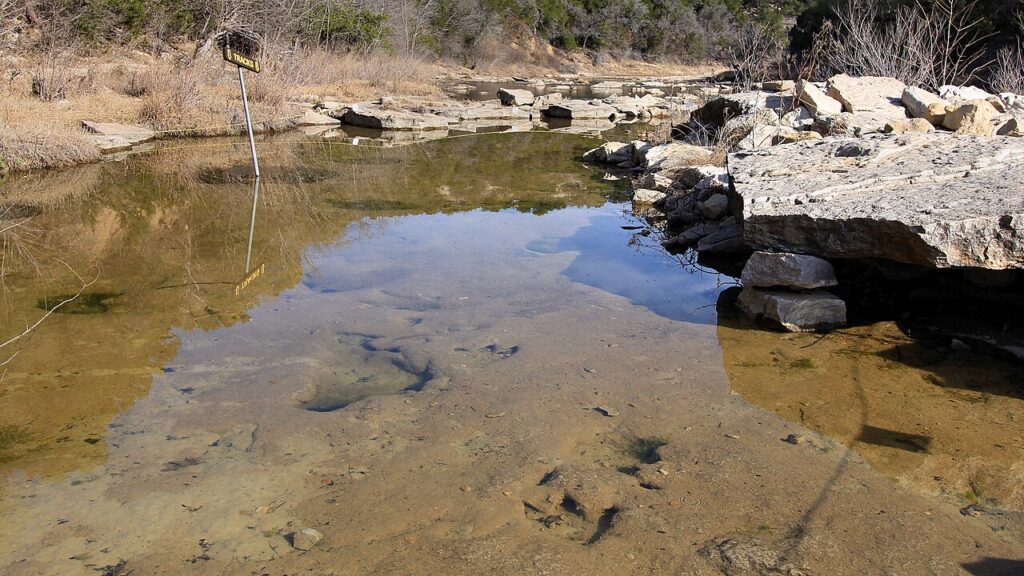
Glen Rose works as a dinosaur weekend because the anchor attraction is close to town, and the second big outing gives children a break from fossils. Stay in Glen Rose, spend one morning at Dinosaur Valley State Park, and save Fossil Rim Wildlife Center for the other day.
The state park is about four miles west of Glen Rose. Allow roughly 10–15 minutes from town, plus time to enter and reach your chosen track-viewing area. Its dinosaur tracks are genuine impressions preserved in the Paluxy River bed, but track visibility is never guaranteed. Rain and river conditions can cover them, and reaching a particular site may involve uneven rock, mud or water.
Check the park’s current track and trail conditions before driving over, and reserve day-use entry ahead when availability is limited. Start with the visitor information and ask which viewing area is suitable that day. A closed or flooded track site is a reason to adjust the plan, not to cross a barrier or attempt a risky river crossing.
Use the afternoon for a slower meal and a walk around downtown Glen Rose. On day two, head to Fossil Rim for its 7.2-mile self-drive wildlife route. This is a living-animal conservation stop, not another dinosaur attraction. The center says the drive takes at least 1.5 hours, so allow a half-day with breaks.
The main attractions are short drives from Glen Rose; budget about 20–30 miles of local driving across the weekend, depending on your hotel and routing, plus the wildlife drive itself. Buying Fossil Rim tickets online ahead is recommended because on-site availability is not guaranteed. Use its visitor entrance directions, rather than routing to a lodge or service entrance.
Open the suggested driving route in Google Maps
Best timing: Spring and fall can make outdoor time more comfortable, but no month guarantees exposed tracks. In hot weather, give each outdoor attraction its own early start.
Traveling with a senior or baby: A stroller may be useful around developed areas but unsuitable near the river. Ask park staff about the easiest currently accessible track views. Fossil Rim lets visitors do the self-drive in their own suitable vehicle; check its vehicle rules before arriving with a convertible, Jeep or trailer.
Photography tip: Photograph an exposed track together with its surroundings from a permitted viewing position. Keep people beside the track area rather than standing in a footprint, and do not wet or alter tracks for a clearer photo.
Keepsake idea: Have children draw a track in a notebook, then compare it with their favorite animal from the wildlife drive. A park postcard adds the place name without taking anything from the river.
3. Casper to Thermopolis, Wyoming: Two Museums and a Summer Dig
Best for: Museum lovers and dinosaur fans interested in supervised excavation.
Suggested time: 3 days; add a day if you want a slower pace.
Main stops: Tate Geological Museum, Wyoming Dinosaur Center and Hot Springs State Park.
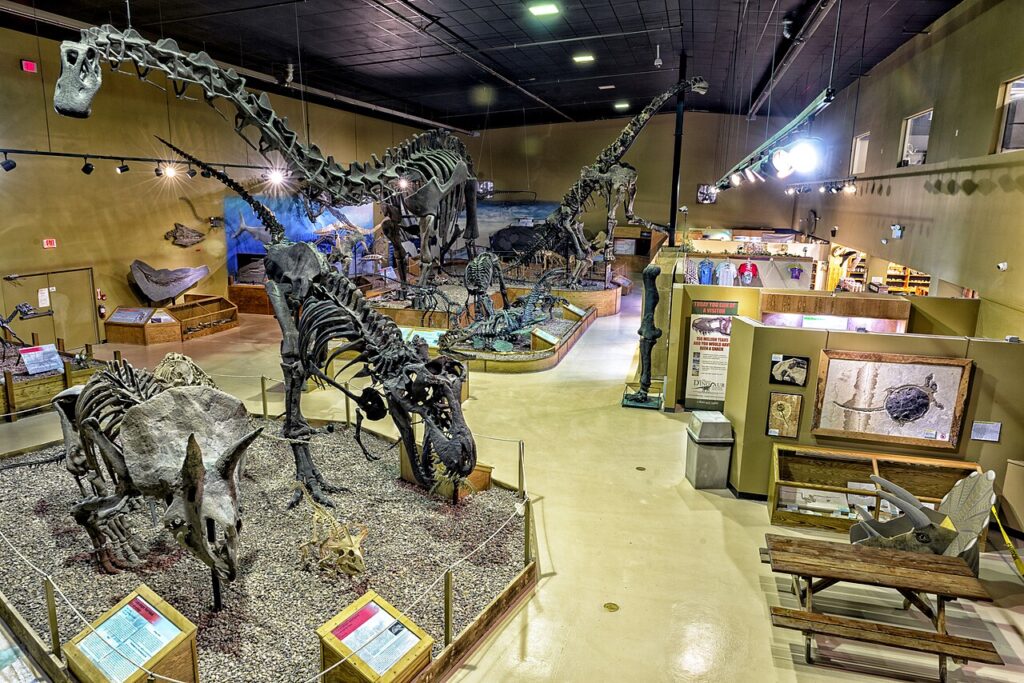
This route gives Wyoming’s dinosaur stops a sensible connection without stretching the itinerary all the way to the Black Hills. Begin in Casper at the Tate Geological Museum on the Casper College campus. It is free and open to the public; its posted schedule currently excludes Sundays. Alongside fossils, its mineral and geology displays help explain what you will see on the drive.
Drive west on US-20/26 toward Shoshoni, then take US-20 north through Wind River Canyon to Thermopolis. Allow roughly 130–135 miles and 2.5–3 hours before sightseeing stops. Stay on the signed highway through the canyon, use designated pullouts and avoid stopping on the shoulder for photos.
Spend the next day at the Wyoming Dinosaur Center. The museum works as a standalone visit. If digging is the reason for the trip, arrange your dates around an available Dig for a Day reservation first, then book your lodging. Quarry visits are organized activities, not places you can drive to and explore independently.
Season matters: The center’s published 2026 Dig for a Day season ran May 25–September 6, weather permitting. It has ended as of this review. Check the next published schedule before planning a dig trip; year-round museum access does not mean year-round excavation.
Keep a second night in Thermopolis so you can add Hot Springs State Park without rushing away after a full field day. The park’s mineral terraces and walking areas give the trip a different ending. Confirm current bathhouse and pool availability if soaking is part of your plan: the state announced outdoor-pool improvements in August 2026, and that announcement alone does not confirm that construction has finished.
Casper and Thermopolis are the practical overnight and meal stops. Fill up before leaving town and carry water, snacks and offline directions for the highway stretch. This is a one-way itinerary; returning to Casper adds approximately the same mileage again.
Open the suggested driving route in Google Maps
Traveling with children: The published full-day dig accepts ages three and up with a parent or legal guardian accompanying minors. A minimum age is not a guarantee that a full day in the field will suit your child; discuss the shorter programs with staff.
Mobility and weather: The dig can involve a strenuous hill, strong sun and uneven ground. Ask about the actual site conditions before reserving for someone with limited mobility. Closed-toe shoes are mandatory for the published program; museums are the easier alternative.
Photography tip: Ask your guide before photographing fieldwork or a discovery. A picture of the tools, your notebook and the excavation context tells more of the story than a close-up alone.
Keepsake idea: Dinosaur bones found in the center’s program stay with its scientific collection. Record the find and the guide’s explanation in a field notebook instead of expecting a take-home dinosaur fossil.
4. Choteau and Bynum, Montana: A Dinosaur Trail Trip You Can Actually Finish
Best for: A summer fossil trip with small museums and an optional research expedition.
Suggested time: 2–3 days.
Main stops: Old Trail Museum in Choteau and The Montana Dinosaur Center in Bynum; Great Falls is a useful arrival point.
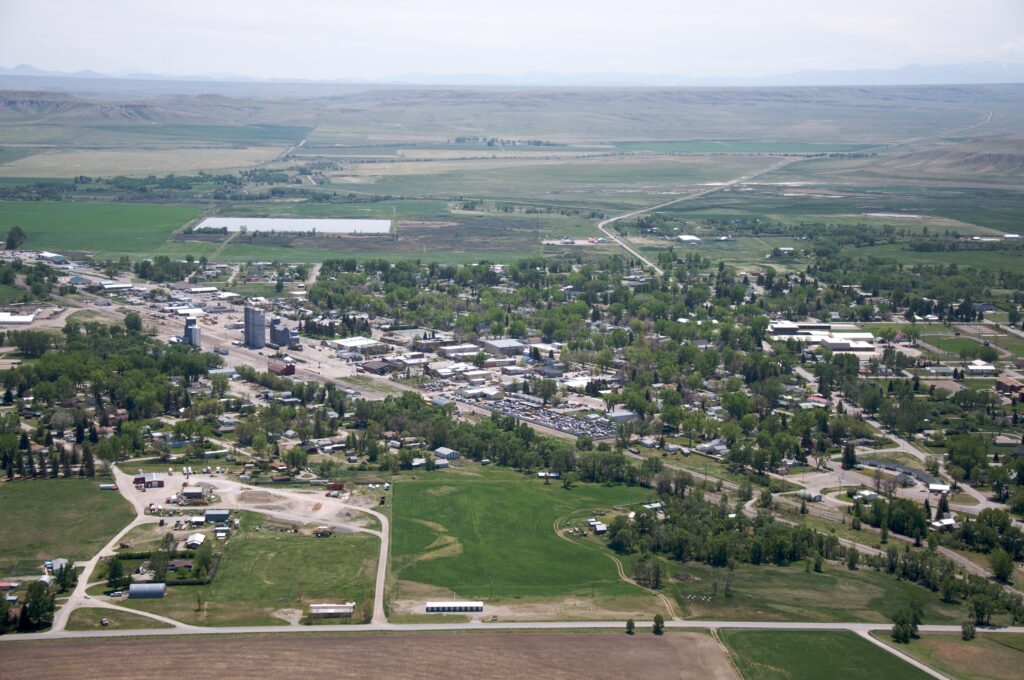
The Montana Dinosaur Trail is a statewide network, not a single compact weekend loop. For a manageable section, use Great Falls as your arrival point, drive to Choteau, and continue a short distance north to Bynum. You get two related dinosaur stops without spending most of the trip crossing Montana.
Great Falls to Choteau is about 53 miles, usually around an hour. Choteau to Bynum adds approximately 13 miles and 15–20 minutes along US-89. That makes the core route roughly 66 miles one way, or about 132 miles if you return to Great Falls by the same roads. Local sightseeing adds mileage.
Visit the Old Trail Museum in Choteau for dinosaur exhibits and the natural and cultural history of the Rocky Mountain Front. This stop is seasonal: the published 2026 main season ended at Labor Day, and the museum was closed Wednesdays during that season. Check its next opening schedule before treating it as a guaranteed stop.
In Bynum, The Montana Dinosaur Center has museum exhibits and separately bookable fossil expeditions. Its published dig season runs June through August. Early June emphasizes prospecting, with excavation sites opening around mid-June; July and August are the clearest fit for travelers whose priority is digging. The center recommends registering at least a month ahead.
A summer visit during the museums’ overlapping schedules is the best version of this route. As of October 8, the Bynum museum’s October–April schedule is by appointment only, and the Old Trail Museum’s posted regular season is over. Do not plan an autumn drive expecting both to admit walk-in visitors.
Stay in Choteau if your main goal is a morning expedition in Bynum. Great Falls is a useful larger base for arrival and departure. Arrange lodging and meals before a field day, pack the food your selected program requires, and fuel up before leaving the larger towns.
For an optional non-dinosaur outing near Great Falls, Benton Lake National Wildlife Refuge has a nine-mile gravel wildlife drive. Allow extra time for the detour and birdwatching; road access can change with weather, and the drive is for daylight visits.
Open the suggested driving route in Google Maps
Public access: Museum admission and booked expeditions are the public routes into this fossil story. Do not assume that named research sites, ranch land or places associated with discoveries are open for independent visits.
Traveling with a senior or young child: The museum version is easier than a field expedition. Ask the center about walking, transport and terrain for the exact program you are considering; age eligibility does not describe the physical effort.
Photography tip: Pair a museum or arrival-sign photo with a wide view of the prairie and Rocky Mountain Front from a legal stopping place. You do not need to enter private land to give the trip a sense of place.
Keepsake idea: Ask about the Montana Dinosaur Trail passport at participating stops. Fossils found on the Montana Dinosaur Center’s expeditions remain in its research collection; a completed notebook is the take-home record.
5. Denver and Morrison, Colorado: Dinosaur Tracks With an Indoor Backup
Best for: A short trip with several dinosaur experiences, plentiful services and flexible weather options.
Suggested time: 2–3 days.
Main stops: Denver Museum of Nature & Science, Dinosaur Ridge, Morrison Natural History Museum and Red Rocks.
This is the most flexible itinerary in the group. Give the Denver Museum of Nature & Science one day, then group the Morrison-area stops on the following day. Its Prehistoric Journey exhibition gives you an indoor fossil experience before you look for evidence in the landscape.
From the museum in Denver’s City Park, budget roughly 25–30 miles and 40–60 minutes to the Dinosaur Ridge visitor area, depending on your chosen roads and traffic. The short drives among Dinosaur Ridge, Morrison’s museum and Red Rocks are generally a few miles each; allow 10–20 minutes per transfer rather than assuming parking is immediate.
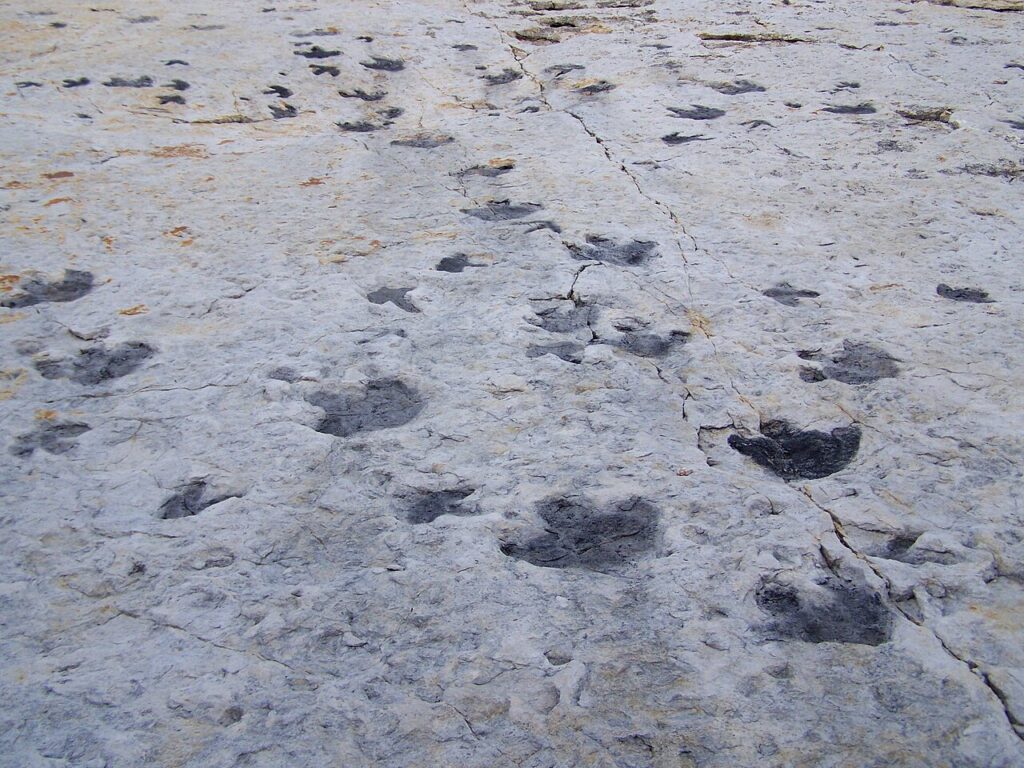
At Dinosaur Ridge, dinosaur tracks and bones are preserved in the exposed rock. You can walk the signed route or buy a guided bus tour. Walking involves an uphill section and little shade, so the bus can be a better fit when the group includes children who tire quickly or someone who wants to limit walking. Call ahead to arrange wheelchair-accessible bus availability.
The Morrison Natural History Museum is a natural second dinosaur stop. Its official visitor page says reservations are required, so book rather than assuming you can walk straight in. If the two attractions’ tour times make the day tight, use a third morning for the museum instead of rushing through both.
Add Red Rocks Park and Amphitheatre for the scenery and music history. Ordinary sightseeing access is free, but event preparation can close the amphitheatre early; a park visit does not guarantee entry into every part of the venue. Check the day’s access before placing it between paid reservations.
Denver or the western suburbs work as overnight bases. Choose lodging on the side of the metro area that suits your next day, rather than repeatedly crossing the city. Food and fuel are readily available, but carry water for the ridge, and leave extra time for traffic. The standard route uses city and foothill roads, not a high mountain pass.
Open the suggested driving route in Google Maps
Best timing: Mild-weather days are easier for the outdoor stops. Snow, ice, summer thunderstorms and heat can change the ridge experience; keep the Denver museum day movable.
Traveling with a senior or baby: The Denver museum publishes accessibility information and offers first-come loaner strollers and manual wheelchairs. At Dinosaur Ridge, ask about boarding, mobility equipment and walking at the bus stops before booking. Red Rocks has substantial slopes and stairs; select the visit around your group’s needs.
Photography tip: Use the tilted rock layers around the trackways to show their setting. At Red Rocks, photograph the sandstone formations from open public areas and leave the stairs and paths clear for other visitors.
Keepsake idea: Choose a Colorado fossil or geology guide and label your photos with the site names. It makes the connection between museum displays and outdoor discoveries easier to remember.
Before You Book a Dinosaur Road Trip
- Book the scarce activity first. If the trip depends on a fossil dig or guided program, confirm that reservation before choosing hotels.
- Check actual opening days. A museum described as year-round may still close on certain weekdays, while a seasonal attraction may require an appointment outside summer.
- Save maps offline. Download directions before the rural Utah, Wyoming and Montana drives. Carry water, snacks and enough fuel for delays.
- Match the outing to the whole group. A museum, a riverbed track site and a research excavation have very different mobility and stamina requirements.
- Keep fossils protected. Follow posted rules and staff instructions. Never chalk, wet, trace, make rubbings from or remove protected tracks and fossils.
For a first dinosaur trip, Vernal gives the clearest fossil-wall experience; Glen Rose is an easy family weekend; and Denver is the most flexible mix of indoor and outdoor stops. Choose Wyoming or the short Montana route when the museum-and-fieldwork combination is what you want—and let the available expedition dates set the calendar.
You can compare the individual museums, trackways and fossil sites in our guide to the best dinosaur attractions in the U.S. before choosing your route.