
Good morning, fellow travelers!
If you have ever wanted to stand beside a towering Tyrannosaurus rex, place your foot next to a real dinosaur track, or watch paleontologists uncover bones from the ground, you do not need a time machine. Some of the best dinosaur experiences in the world are right here in the United States.
Our tour includes famous natural-history museums, outdoor trackways, active fossil sites, and one enormous wall containing approximately 1,500 dinosaur bones. Some stops are perfect for an easy family afternoon, while others deserve an entire road trip.
There is no official nationwide ranking based solely on dinosaur-attraction attendance, so these destinations are ranked using their overall popularity, fossil significance, visitor experience, name recognition, and value as travel destinations. Public access and official links were checked on September 3, 2026, but always confirm current hours, tickets, road conditions, and tour availability before leaving home.
Let’s meet some dinosaurs!
Jump to a Dinosaur Destination
1. American Museum of Natural History
New York City, New York
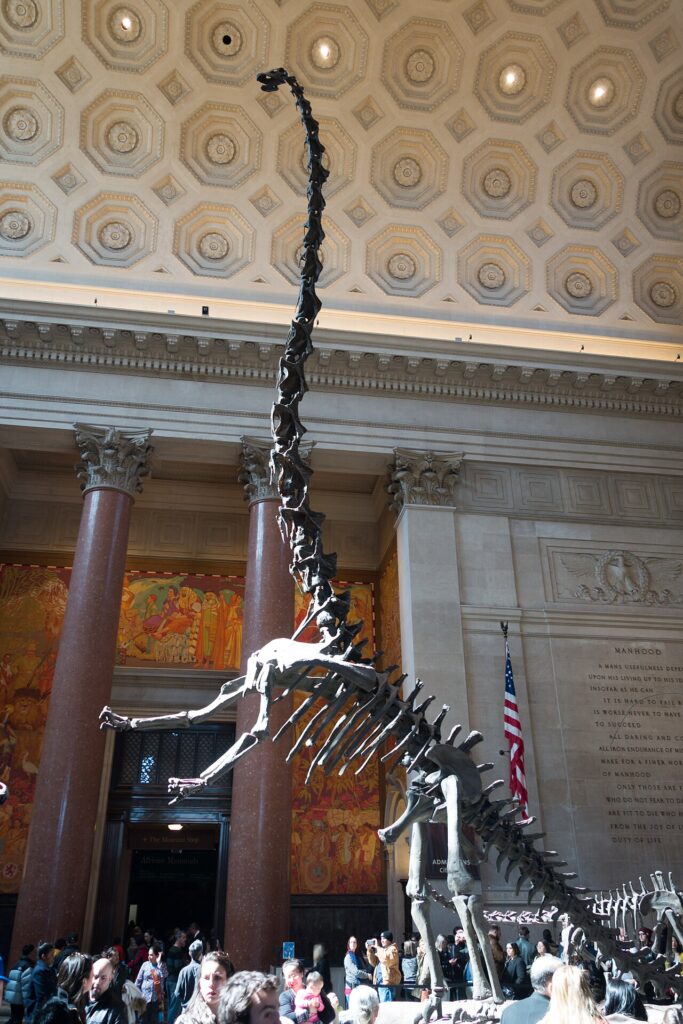
Our first stop begins with one of the greatest dinosaur entrances anywhere.
Walk into the Theodore Roosevelt Rotunda and look up. A towering Barosaurus rears onto its hind legs as it appears to defend its young from an attacking Allosaurus. Even visitors who think they are “not really dinosaur people” tend to stop and stare.
Continue upstairs to the museum’s two major dinosaur halls, where approximately 100 specimens are displayed. About 85% of them are genuine fossils rather than casts. You will meet Tyrannosaurus rex, Triceratops, Stegosaurus, Apatosaurus, Deinonychus, a remarkably preserved dinosaur “mummy,” and an original section of the Glen Rose dinosaur trackway.
The museum is normally open daily except Thanksgiving and Christmas. The dinosaur halls are included with admission. Visit the American Museum of Natural History dinosaur halls for current information.
Plan for: At least three or four hours. Allow a full day if you want to explore the rest of the museum.
Traveling with a senior: This is an enormous museum, so do not try to see everything. Use the elevators and make the fourth-floor dinosaur halls your first priority.
Traveling with young children: Begin with the dramatic rotunda scene while everyone is rested. Strollers are permitted, although the galleries can become crowded on weekends and holidays.
Photography tip: Stand well back from the Barosaurus display to capture its full height. In the fossil halls, use a slightly lower camera angle to make the skeletons look even more imposing.
Souvenir tip: Look for a model or book connected to one of the specific dinosaurs you saw. It will carry more meaning than a generic dinosaur toy.
2. Smithsonian National Museum of Natural History
Washington, D.C.
Welcome to “Deep Time,” where dinosaurs are part of a much larger story about ancient ecosystems, extinction, climate, and the changing Earth.
The Smithsonian’s David H. Koch Hall of Fossils is best known for its striking Tyrannosaurus rex and Triceratops scene. Instead of simply presenting rows of skeletons, the exhibit helps visitors understand how prehistoric animals lived, interacted, and responded to a changing world.
Admission is free, and museum tickets are not required. The museum is normally open every day except December 25. See the Smithsonian visitor information and Deep Time fossil hall pages before visiting.
Plan for: Two or three hours for the fossil hall and a few additional highlights.
Getting there: There is no public Smithsonian parking on the National Mall. Taking Metro is usually much easier than driving and searching for a nearby garage.
Traveling with a senior: All public floors and exhibitions are accessible by elevator. A limited number of manual wheelchairs are available free of charge, but the museum recommends bringing your own if it is essential.
Traveling with a baby: Strollers are permitted, and a nursing room is available near the Constitution Avenue Lobby. Pack lightly because there are no public lockers or coat-check facilities.
Photography tip: Personal photography is allowed, but tripods, monopods, and selfie sticks are prohibited. Include a few visitors in your wide photographs to show the impressive scale of the fossils.
Souvenir tip: Look for the Dinos and More Store, but check its operating hours because they can vary.
3. Field Museum
Chicago, Illinois
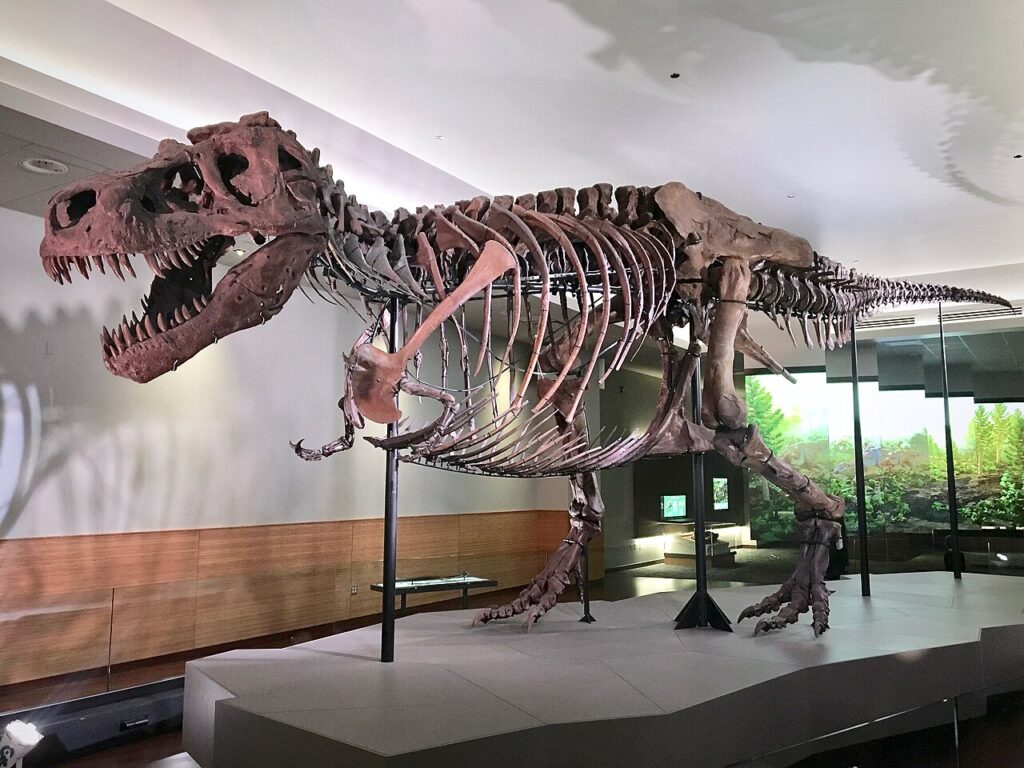
Everyone, meet SUE.
At approximately 40 feet long, SUE is the most complete Tyrannosaurus rex skeleton ever discovered. The exhibit presents this famous predator in a Late Cretaceous environment, accompanied by animations, sensory stations, and a light presentation that points out interesting details on the bones.
SUE may be the celebrity, but do not hurry past Maximo. This enormous titanosaur stretches across Stanley Field Hall and creates one of the best dinosaur photo opportunities in the country.
SUE is included with basic museum admission. The Field Museum is normally open daily except Thanksgiving and Christmas. Read the museum’s entertaining guide to visiting SUE.
Plan for: Three or four hours.
Traveling with a senior: Use the accessible East Entrance and elevators instead of the main staircase. Accessible parking is available in the East Museum Lot, but arriving early is wise.
Traveling with children: One sensory station lets visitors experience what T. rex breath might have smelled like. Children often love it, although adults may wish they had stood a little farther away.
Photography tip: Photograph Maximo from a low angle to emphasize the dinosaur’s size. For SUE, step back far enough to include the skull and tail in the same frame.
Souvenir tip: SUE has a personality and merchandise collection all their own. A SUE-themed keepsake is an excellent reminder of the actual fossil you encountered.
4. Dinosaur National Monument
Jensen, Utah, and Dinosaur, Colorado
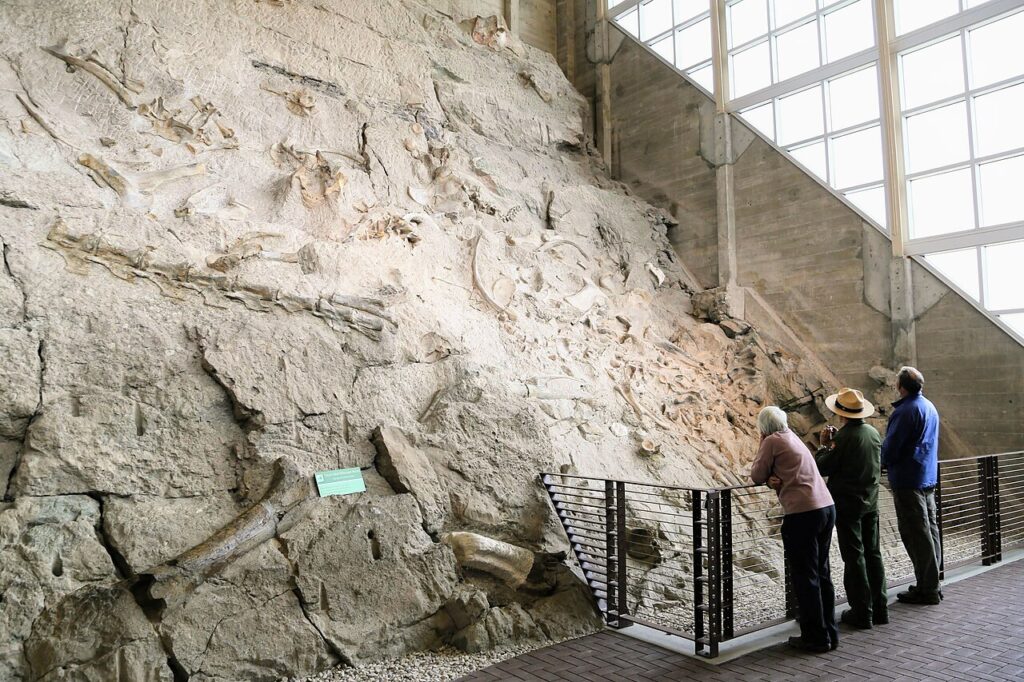
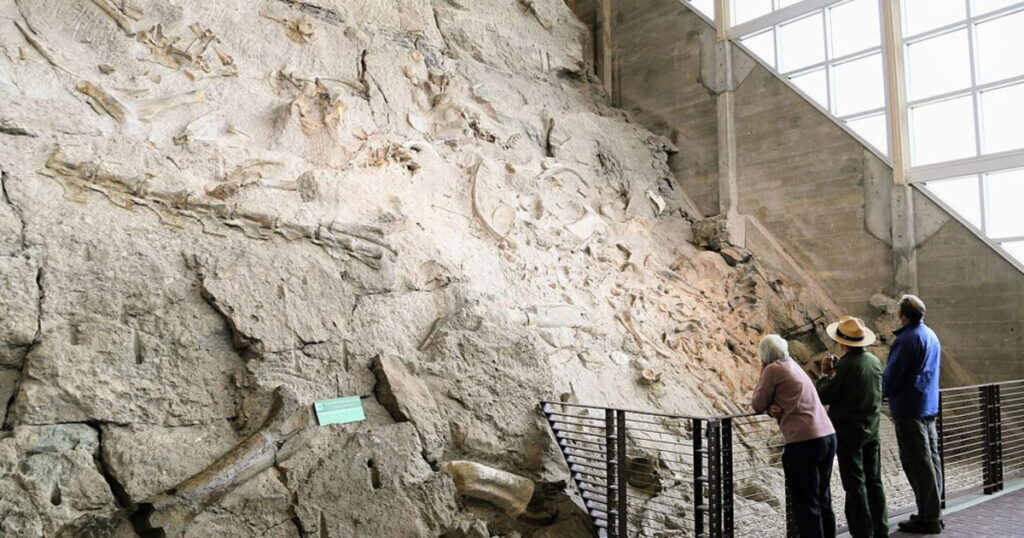
Now we are leaving the traditional museum and heading directly to the source.
Inside the Quarry Exhibit Hall, approximately 1,500 dinosaur bones remain embedded in the rock where they were found. Look closely and you may identify bones from Allosaurus, Apatosaurus, Camarasaurus, Diplodocus, and Stegosaurus. Several designated fossils can even be touched.
That is correct: you can place your hand on a genuine dinosaur fossil approximately 149 million years old.
The Quarry Exhibit Hall is open year-round and is ADA-accessible. Depending on the season, visitors reach it by park shuttle or private vehicle. Check the Quarry Exhibit Hall information and current park conditions before traveling.
Plan for: Two to four hours for the quarry and visitor center. Allow one or two days if you want to explore the larger monument.
Traveling with a senior: The comfortable, accessible Quarry Exhibit Hall is the easiest option. Outdoor trails are exposed and can become extremely hot.
Traveling with babies or young children: Visit early in the day, carry plenty of water, and limit midday outdoor activities. Pets are not permitted inside the Quarry Exhibit Hall.
Driving warning: Some remote Colorado-side roads are steep, narrow, and unpaved. Echo Park Road may require a high-clearance four-wheel-drive vehicle and is not recommended for large RVs or trailers. Cell service can be nonexistent.
Photography tip: Include a person examining the fossil wall to demonstrate its scale. Outdoors, early or late sunlight brings out the colors and textures in the surrounding rock formations.
Souvenir tip: Complete the Junior Ranger program and earn a badge. Adults are welcome to participate too.
5. Museum of the Rockies
Bozeman, Montana
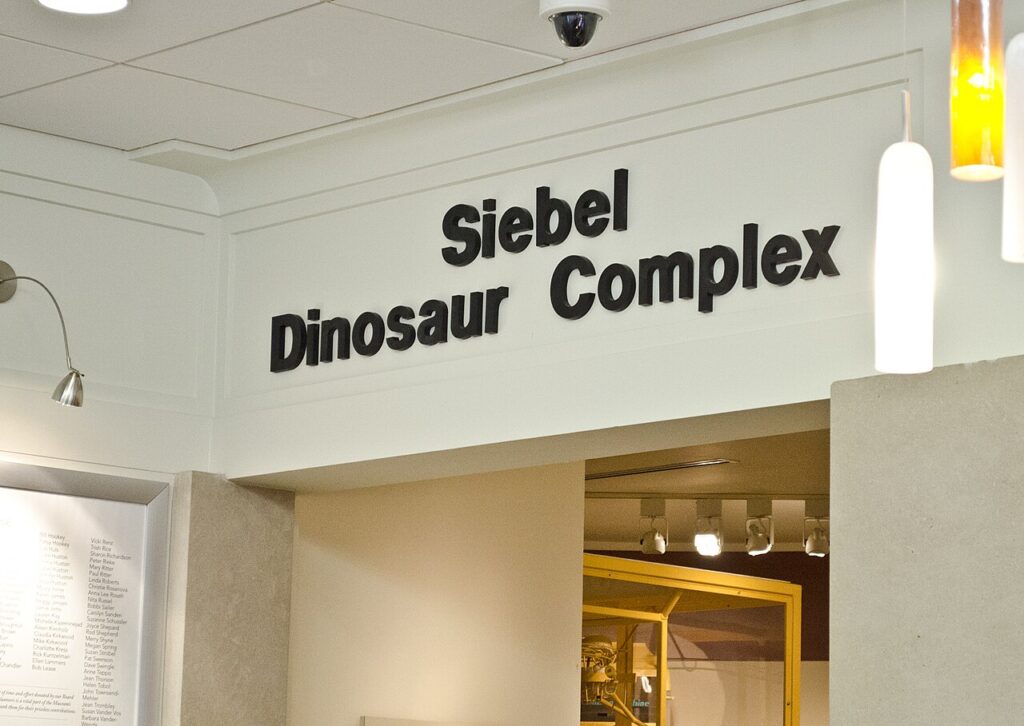
Montana is one of America’s great dinosaur states, and the Museum of the Rockies is the perfect introduction.
The year-round Siebel Dinosaur Complex contains one of North America’s most significant dinosaur-fossil collections. Its stars include Montana’s T. rex and an exceptional collection of horned dinosaurs.
Many travelers stop in Bozeman on the way to or from Yellowstone, but dinosaur lovers should not treat this museum as a simple rainy-day backup. It deserves to be one of the main attractions on your itinerary.
The museum and dinosaur complex are currently open to visitors. Check the Museum of the Rockies for daily hours and ticket information.
Plan for: Two or three hours, or longer if you add a planetarium show.
Traveling with a senior: This is an easier indoor experience than an outdoor fossil site. A planetarium presentation can also provide a comfortable seated break.
Traveling with young children: The Martin Children’s Discovery Center offers a change of pace when younger visitors need something more interactive.
Photography tip: Begin with a wide, centered view down the dinosaur hall. Then move closer for detailed photographs of the horns, teeth, skulls, and fossil textures. Outside, pose with Big Mike, the museum’s bronze T. rex.
Souvenir tip: Choose a Montana dinosaur field guide or a replica based on a locally discovered species.
6. Carnegie Museum of Natural History
Pittsburgh, Pennsylvania
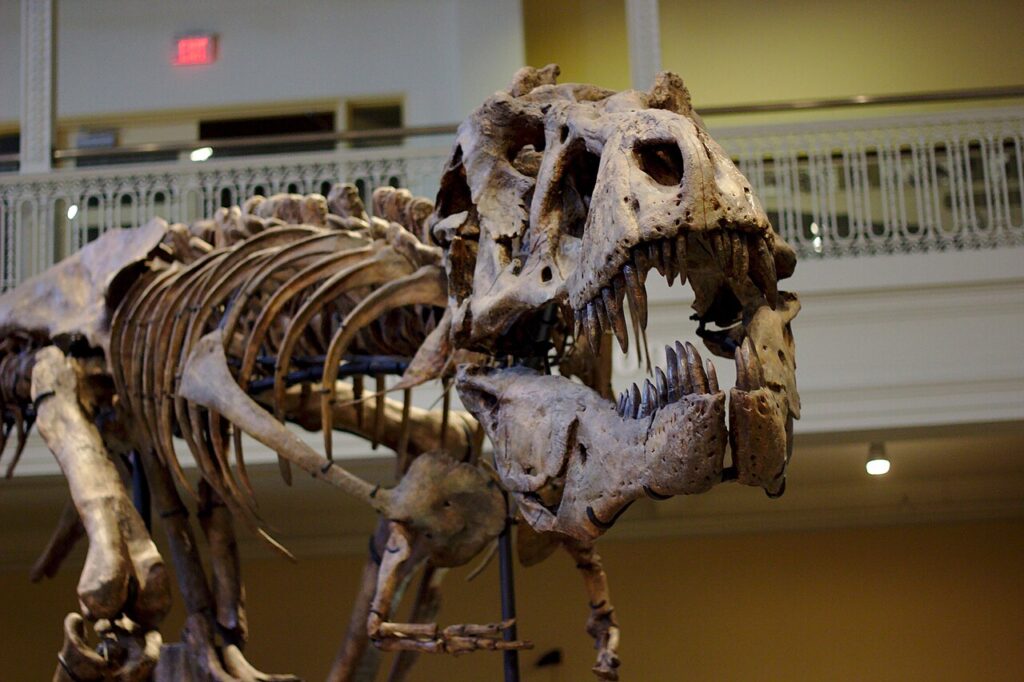
At the Carnegie Museum, the word to remember is “original.”
Approximately 75% of the more than 230 objects in its dinosaur exhibition are genuine fossils. Most of the mounted skeletons are real rather than reproductions.
Several are holotypes—the original specimens scientists used to identify and describe their species. These include Diplodocus carnegii, Apatosaurus louisae, and a Tyrannosaurus rex.
The exhibition also places animals into carefully researched prehistoric environments. If two dinosaurs appear together, they really did live during the same period and in the same region.
Learn more through the Kamin Hall of Dinosaurs and current visitor information pages.
Plan for: Two to four hours. Admission also includes access to the adjoining Carnegie Museum of Art.
Traveling with a senior: Galleries, restrooms, stores, dining areas, and theaters are wheelchair-accessible. Manual wheelchairs are available free on a first-come basis. Personal-care attendants accompanying visitors with disabilities receive free admission.
Traveling with a baby: Strollers are welcome, and loaner strollers may be available. A private breastfeeding area is located near Discovery Basecamp.
Photography tip: Start with wide pictures showing the reconstructed environments. Then photograph the displays explaining which portions of each mount are genuine fossil material.
Souvenir tip: A Diplodocus keepsake is particularly fitting because of the species’ important connection to the museum.
7. Natural History Museum of Los Angeles County
Los Angeles, California
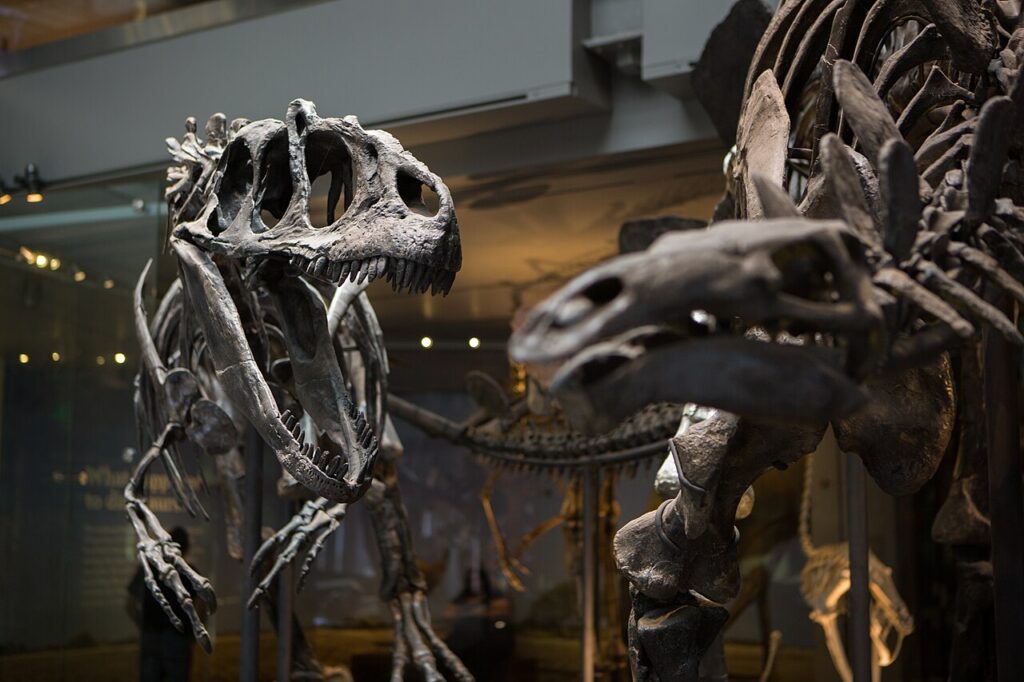
Most museums introduce you to one Tyrannosaurus rex. Los Angeles introduces you to three.
The museum’s centerpiece is the world’s only T. rex growth series of its kind, featuring a baby, juvenile, and sub-adult. The two-story Dinosaur Hall contains more than 300 fossils and 20 mounted skeletons.
You can also see Polly, the only known fossil of a pregnant plesiosaur, and visit the Dino Lab, where paleontologists may be working on recently collected fossils. Outside the main hall, look for Gnatalie, the museum’s unusual green-boned long-necked dinosaur.
Dinosaur Hall is included with regular admission. Check the Dinosaur Hall and visitor information pages before arriving.
Plan for: Two or three hours.
Getting there: Traffic and parking around Exposition Park can become difficult during USC football games and other major events. Metro’s E Line is often the less stressful option.
Traveling with a senior: Wheelchairs are offered on a first-come basis. Take the elevator to the mezzanine for an impressive overhead view without using the stairs.
Traveling with a baby: The museum has a lactation room and diaper-changing stations in several restrooms. Children age two and younger currently enter free.
Photography tip: The mezzanine is the best location for capturing all three T. rexes. On the lower level, photograph a child standing beside the trackway to show the difference in scale.
Souvenir tip: The dedicated Dino Store is directly beside Dinosaur Hall.
8. Dinosaur Valley State Park
Glen Rose, Texas
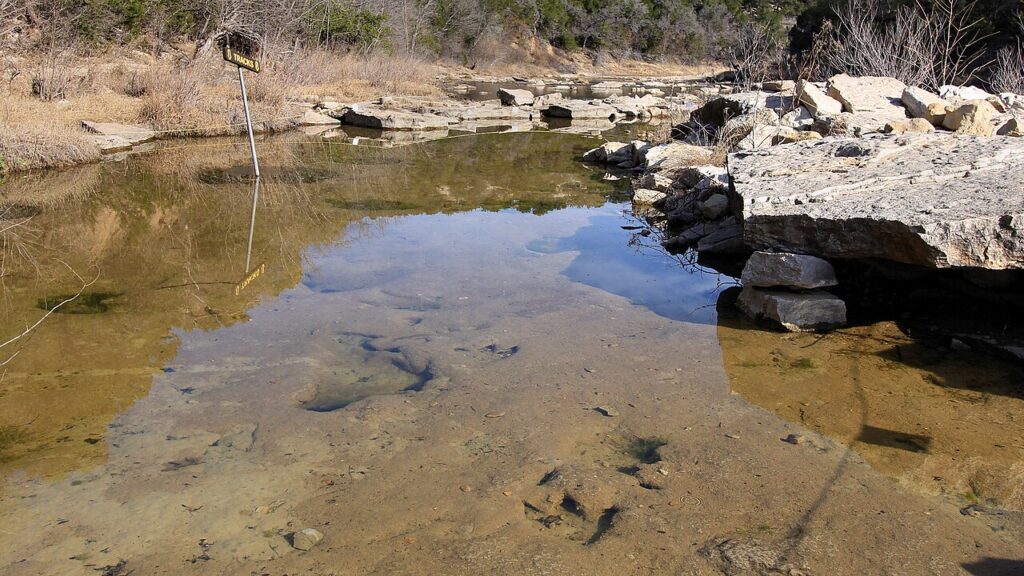
Our next destination invites you to take off your hiking shoes, step carefully into the Paluxy River, and search for footprints made by dinosaurs more than 100 million years ago.
These are not museum reproductions. They are genuine dinosaur tracks preserved in the original riverbed.
The experience depends heavily on water levels. Tracks can be clearly visible during dry periods and completely hidden after heavy rain. Trails may also close when conditions are wet.
The park is open daily, but trail conditions and track visibility can change rapidly with water levels and weather. It frequently reaches capacity, so reserve a day pass before making the drive. Check the Dinosaur Valley State Park website or contact the park for the latest track and trail conditions.
Plan for: At least half a day. Stay overnight if you want to camp or explore more of the park’s trails.
Traveling with a senior: Reaching the tracks may require crossing natural rock, shallow water, mud, or uneven ground. Ask park staff about its assistive all-terrain chairs.
Traveling with babies or young children: A child carrier may be more useful than a stroller near the river. Bring sun protection, water, insect repellent, dry clothes, and shoes that grip wet rock.
Photography tip: Place a person’s foot beside—but never directly on—a track to demonstrate its size. A polarizing filter can reduce reflections on the water.
Souvenir tip: Pick up a park guide, Junior Ranger activity, or stamped travel journal. Never remove rocks, fossils, or natural material.
9. Dinosaur Ridge
Morrison, Colorado
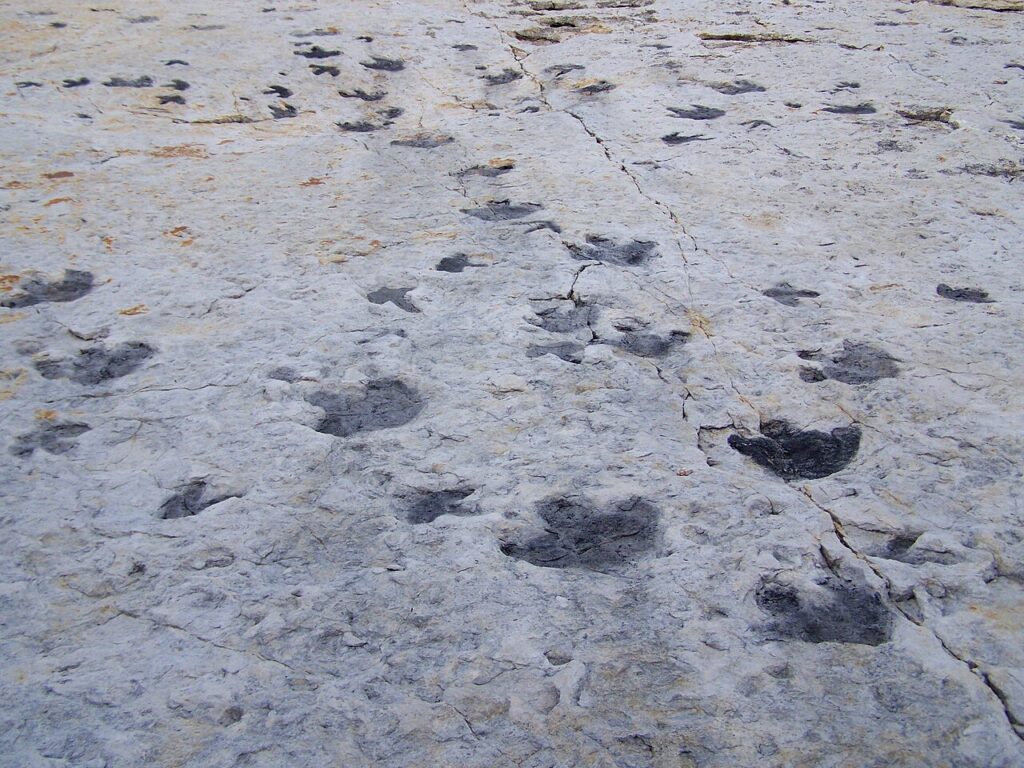
Only a short drive from Denver, Dinosaur Ridge preserves a genuine dinosaur highway.
Along the ridge, you can see dinosaur trackways, exposed bones, ripple marks from an ancient shoreline, and tilted rock layers that reveal millions of years of geological history. This is also part of the region where several famous Western dinosaur discoveries were made.
Ordinary visitor vehicles are not permitted on the main ridge road, so a guided bus tour is often the easiest and most informative way to explore it. Visitor services and public tours are operating, and a new Deep Time Detour exhibition opened in 2026.
Check the Dinosaur Ridge visitor information and current hours and directions pages.
Plan for: Approximately 90 minutes to three hours.
Traveling with a senior: Reserve the guided bus instead of walking the exposed ridge. Contact the attraction beforehand if someone uses a wheelchair or other large mobility device.
Traveling with a baby: The bus tour is generally easier than walking the full ridge, but bring water and sun protection. Natural shade is limited.
Photography tip: Visit when lower, angled sunlight casts small shadows inside the tracks. Include the dramatically tilted rock layers in some pictures to tell the broader geological story.
Souvenir tip: Look for a trackway print, geology guide, or locally themed field notebook. Do not trace, chalk, wet, or make rubbings from protected tracks.
10. Wyoming Dinosaur Center
Thermopolis, Wyoming
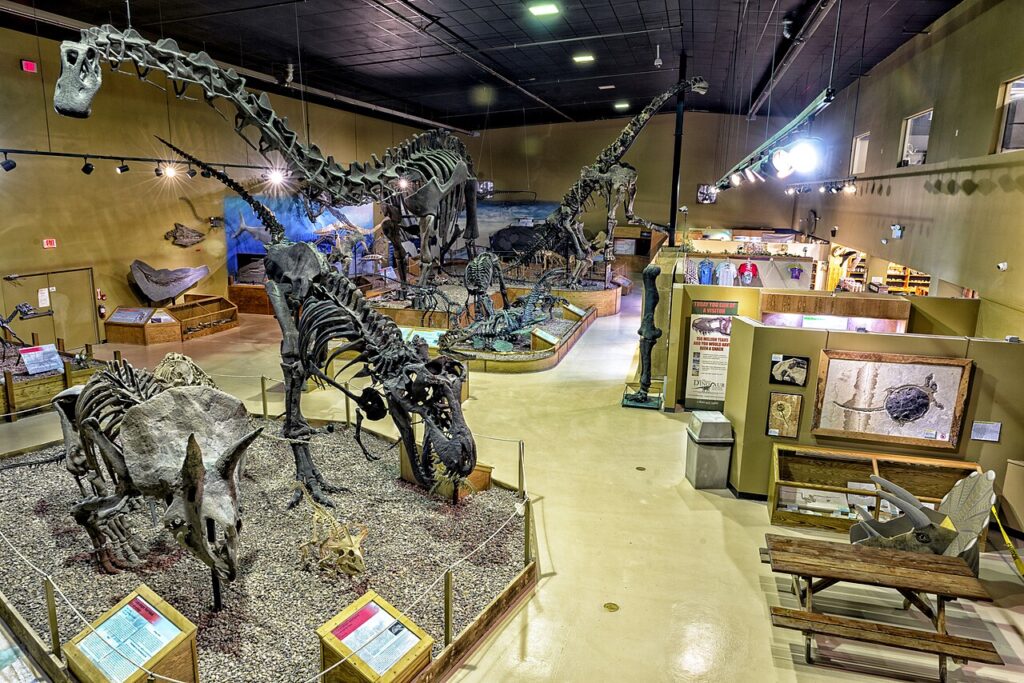
We are ending our tour with a destination where you can do more than look at fossils–you may be able to help excavate them.
The Wyoming Dinosaur Center combines a museum filled with mounted skeletons and a seasonal collection of guided field programs. During the half-day Shovel Ready program, visitors receive instruction, travel to an active site, use excavation tools, and learn how discoveries are documented.
If you uncover a fossil, your name and the discovery information are entered into the site record. That is a vacation story no gift shop can duplicate.
The museum operates seven days a week with seasonal hours. Field programs require separate advance reservations and are weather-dependent. See the Wyoming Dinosaur Center’s current hours and Shovel Ready program information.
Plan for: Approximately two hours for the museum or a half to full day for a field program.
Traveling with a senior: The indoor museum is the easier option. Excavation sites can involve strenuous hills, dry weather, strong sun, and an elevation of approximately 4,500 feet. Discuss mobility and health considerations with the center before reserving.
Traveling with children: The half-day program accepts children beginning at age three, but every participant needs a paid reservation. Minors must be accompanied by a parent or legal guardian.
What to wear: Closed-toe shoes are mandatory for field programs. Bring a hat, sunscreen, weather-appropriate clothing, and a refillable water bottle.
Photography tip: Ask your guide to take a photograph of your family using the excavation tools. Always photograph a discovery where it lies before touching or moving it.
Souvenir tip: A field notebook containing details from your excavation may become your favorite keepsake. If purchasing a fossil, ask about its origin and documentation.
Which Dinosaur Destination Is Right for You?
- If you want the grandest traditional dinosaur museum, choose the American Museum of Natural History.
- If you want an impressive free experience, visit the Smithsonian.
- If meeting a famous T. rex is your dream, go see SUE at the Field Museum.
- If you want to see bones exactly where they were discovered, drive to Dinosaur National Monument.
- If you want to stand in genuine footprints, plan for Dinosaur Valley State Park or Dinosaur Ridge.
- If you have always wanted to try real paleontology, reserve a field program at the Wyoming Dinosaur Center.
Whichever destination you choose, remember that genuine fossils are irreplaceable. Never touch, trace, wet, chalk, climb on, or remove a fossil unless staff has specifically identified it as part of a hands-on activity.
Pack your camera, bring comfortable shoes, and prepare to feel very small. America’s dinosaurs are waiting.